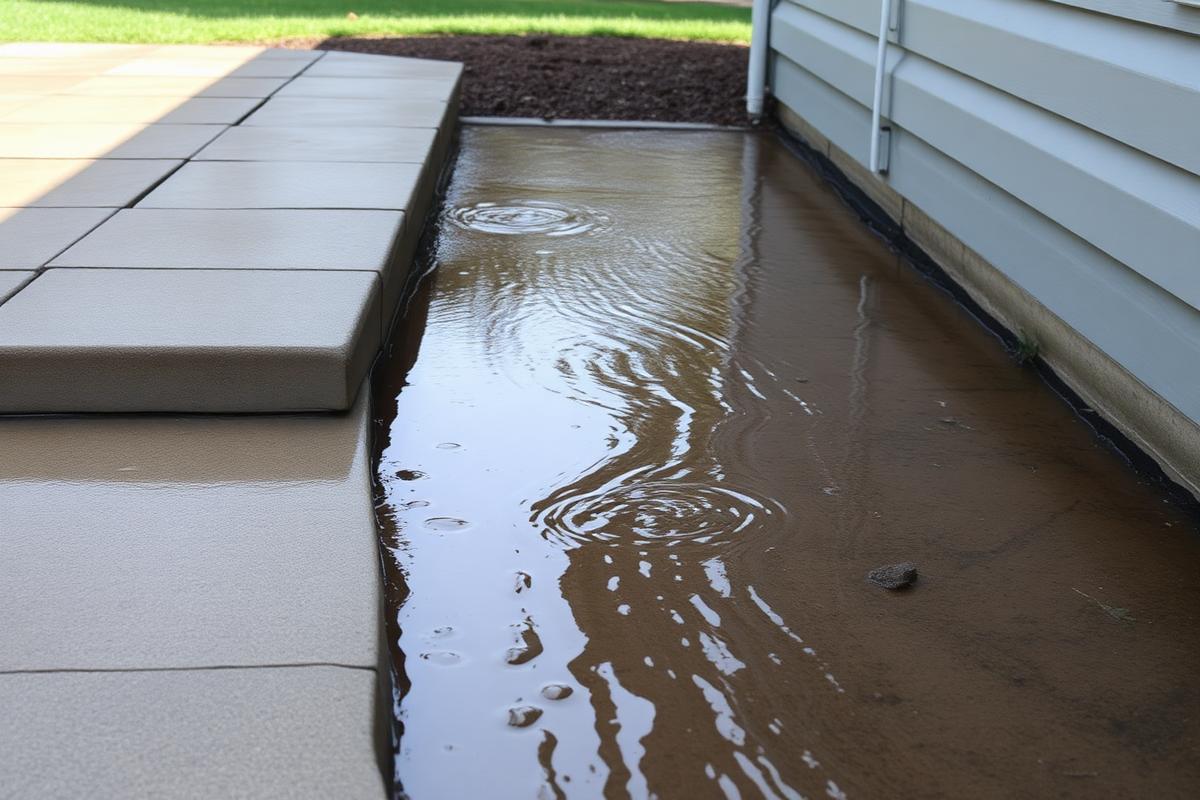
Homeowner Language for a Real Problem
Most homeowners don't call it "surface drainage" — they describe what they see:
- "Water sitting in my backyard"
- "The yard stays wet after rain"
- "Soggy grass I can't mow"
- "Muddy areas in the same spots every year"
- "Water pooling near the house"
These are all standing water problems, and they're some of the most common reasons homeowners request a drainage assessment.
Why Water Ends Up Sitting There
- The yard's slope pushes water toward the low spot instead of away from the house
- Downspouts empty right next to the foundation
- The soil in that area is compacted and no longer absorbs water quickly
- Runoff from a neighbor's property flows in and stops in your low spot
- An existing drain line is damaged, crushed, or draining nowhere
Approaches That May Help
Every property is different, but standing water is usually corrected with one or more of these:
- Regrading the affected area so water has somewhere to go
- Catch basins to intercept surface water at the low point and pipe it away
- French drains where water is moving through the soil, not just across the surface
- Underground downspout drainage to move roof water well past the foundation
- Improving the discharge point of an existing drainage system
What We Can't Do From a Website
Standing water can look identical from one yard to the next and still have very different causes. A quick on-site look at slope, downspouts, and where the water actually goes is the best way to know which approach fits your property — and to avoid installing something that won't fix the underlying problem.
Trying to decide whether it's a weekend project or a call to a pro? Our DIY vs. Professional Yard Drainage guide covers the tradeoffs, common mistakes, and when standing water becomes a bigger issue.