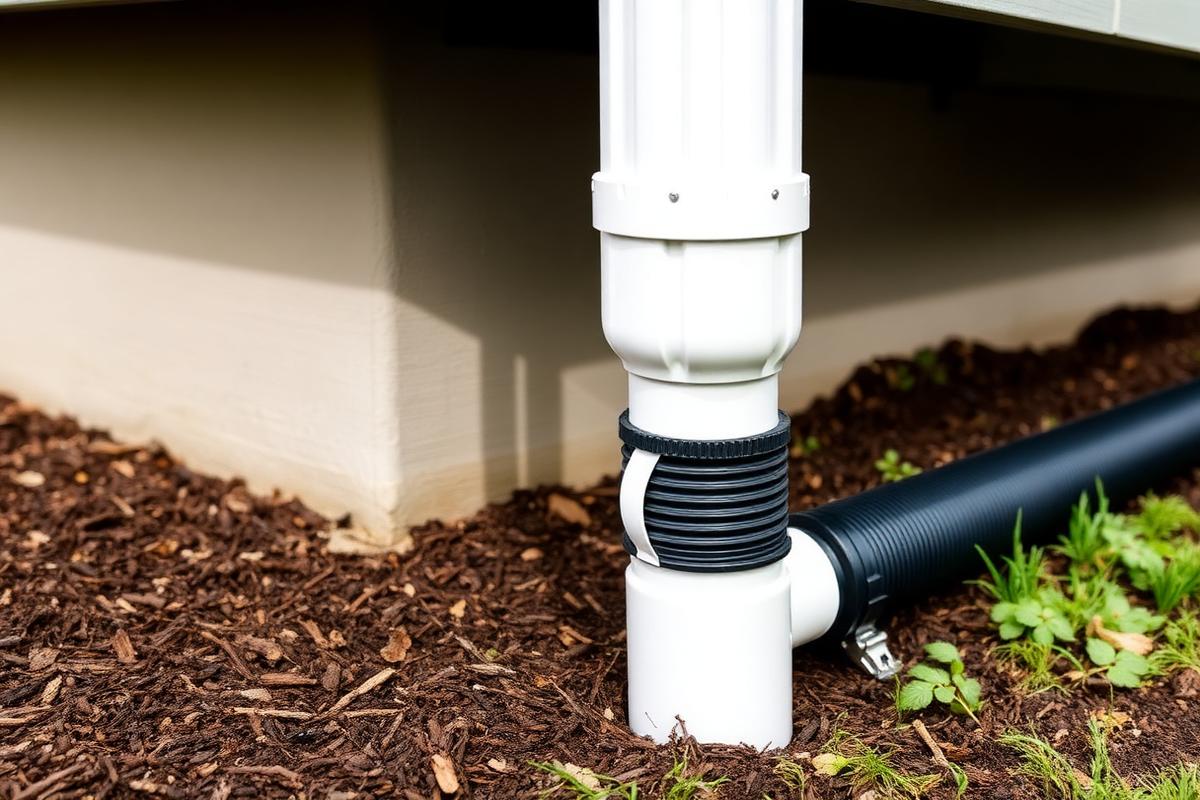
Why Downspouts Matter So Much
Roofs shed a lot of water. When downspouts empty right beside the house, that water hits the ground in the exact place it shouldn't: against the foundation. Even a small amount of concentrated runoff can cause soggy lawn areas, erosion, damaged plantings, and moisture problems near basement walls.
Common Downspout Problems
- Downspouts discharging directly against the foundation
- Roof runoff running across a walkway or patio
- Downspouts emptying into a low area of the lawn
- Splash blocks or short extensions that clearly aren't enough
- Existing underground downspout lines that no longer flow properly
Underground Downspout Drainage
Underground downspout drainage moves roof water from the downspout into a buried pipe that carries it well past the foundation to a proper discharge point — a lower area of the yard, a curb, a dry well, or a drainage system already in place.
- The downspout is tied into a rigid or corrugated drain line
- The line is buried and sloped to keep water flowing by gravity
- The discharge point is chosen so water doesn't just recirculate
Where This Fits With Other Drainage Work
Downspout drainage is often the first change made when correcting broader yard drainage problems, because concentrated roof water is such a large contributor. It also frequently ties into catch basins or larger yard drainage lines already being installed.
When a Simple Extension May Be Enough
Not every downspout needs an underground line. In some cases, a longer surface extension carrying water past the foundation and onto graded lawn will do the job. The right choice depends on the property, the yard layout, and what happens with the water once it leaves the downspout.