DIY vs. Professional Yard Drainage: When to Call a Pro (2026 Guide)
Which yard drainage problems can you fix yourself and which need a pro? A homeowner's guide to downspouts, grading, French drains, and catch basins in Niagara County, NY.
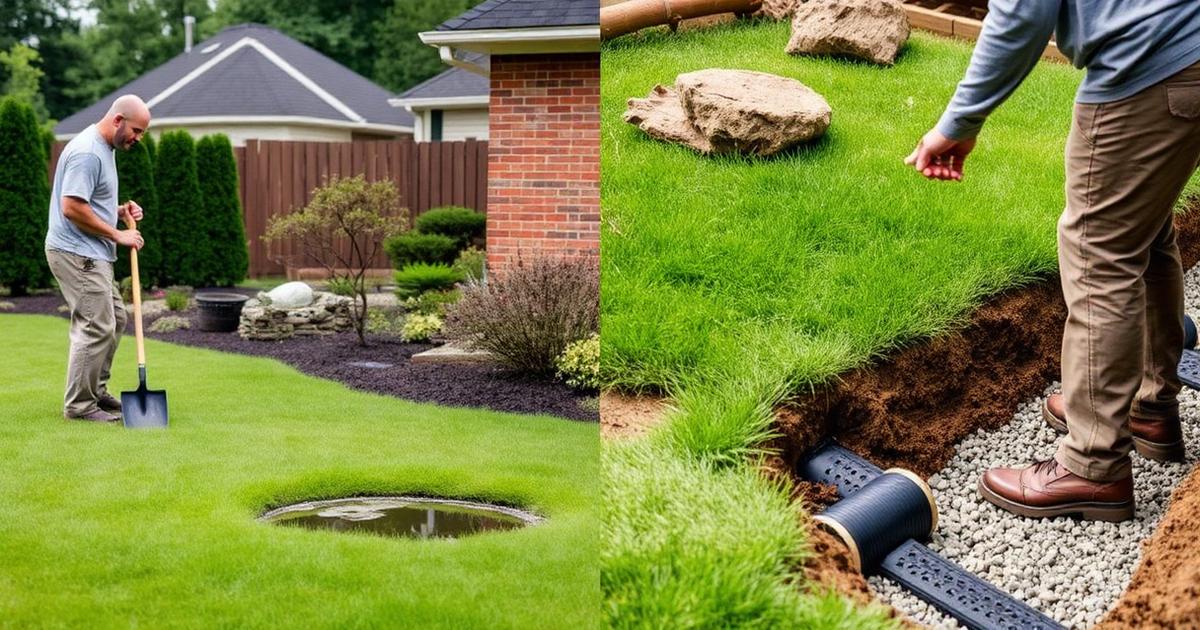
Start with the question every homeowner should ask
Not every drainage problem needs a contractor. A clogged downspout or a short, obvious low spot is almost always DIY territory. But once water is standing longer than a day, showing up near your foundation, or coming back after the same fix, you are past the point where surface-level fixes will hold.
DIY-friendly drainage fixes
- Extending downspouts. Add a 6- to 10-foot extension so water discharges well away from the foundation. Any big-box store carries the parts.
- Filling minor low spots. A wheelbarrow of topsoil, tamped and seeded, solves shallow puddles that dry within a day.
- Cleaning gutters and window wells. The single cheapest way to prevent basement moisture in Niagara County winters.
- Redirecting a sump discharge. If your sump pump dumps too close to the house, extending the line with rigid pipe is a Saturday project.
Call a pro for these
- French drain installation — needs a consistent 1% slope, filter fabric, washed stone, and a legal discharge point. DIY installs commonly clog or freeze.
- Catch basins — sized incorrectly, they either fill with silt or overflow in the storms they were meant to handle.
- Yard regrading — you cannot eyeball a 2% pitch across 40 feet of lawn. A pro shoots grades with a laser level.
- Persistent standing water — if the same area is wet after every rain, the water table or soil composition is the problem, not the surface.
- Buried downspout drainage — tying multiple downspouts into a piped system needs proper cleanouts and a pop-up emitter or dry well.
How to tell which side of the line you're on
Ask yourself three questions after the next heavy rain in Lockport, Wheatfield, or North Tonawanda:
- Is water sitting for more than 24 hours after it stops raining?
- Is any of that water within 5 feet of the foundation?
- Have you fixed this before and had it come back?
Two yeses means it's time to bring in a drainage contractor. Three yeses means you probably need a subsurface system, not more topsoil.
Frequently asked questions
Who do I call for drainage problems in my yard?
For simple issues like clogged downspouts or short extensions, most homeowners handle it themselves. For persistent standing water, water near your foundation, French drains, or catch basins, call a residential yard drainage contractor — not a plumber or landscaper — because the fix involves grading, soil composition, and buried drainage pipe.
How do I fix drainage in my yard?
Start by redirecting downspouts at least 6 feet from the foundation and re-grading obvious low spots so water flows away from the house. If water still pools after 24 hours or shows up near the foundation, you need a subsurface solution such as a French drain or catch basin, which requires professional installation to grade the pipe correctly.
Can I install a French drain myself?
Technically yes, but most DIY French drains fail within a year or two. They need a consistent slope of about 1% (roughly 1 inch of drop per 8 feet), the right gravel and fabric, and a legal, freeze-safe discharge point. Getting any one of those wrong causes the drain to clog, freeze, or send water back toward the house.
How much does professional yard drainage cost in Niagara County?
Simple downspout extensions or single catch basins typically run a few hundred dollars. A full French drain installation for a wet backyard is usually in the low thousands, depending on length, depth, and how the water is discharged. We give free written estimates before any work starts.
Is standing water in the yard an emergency?
If water is inside the basement, at the foundation, or sitting for more than 48 hours after rain, treat it as urgent — prolonged saturation can crack foundations, kill lawns, and breed mosquitoes. Standing water further from the house that dries within a day is annoying but not emergency-level.